
Must-Have Accessories for Guitarists: Enhance Your Playing Experience
Sep 2nd 2025
Must-Have Accessories for Guitarists: Enhance Your Playing Experience
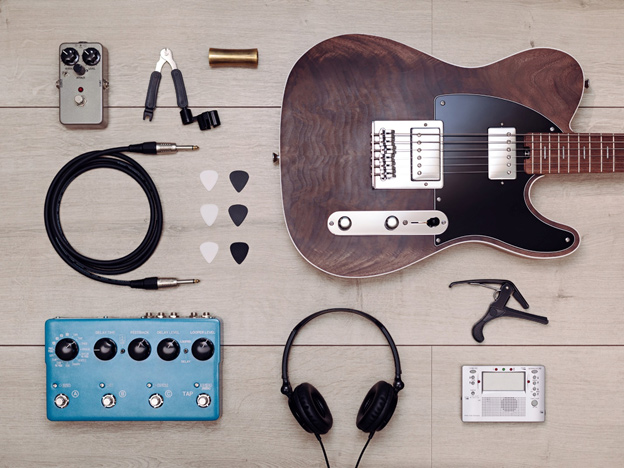
A good guitar is the start of a great musical journey. But just like chefs need the right kitchen tools to prepare a delicacy, guitarists need the right tools to get the most from their instruments. Accessories for guitarists can do many things, including improving sound quality, enabling the use of new techniques, creating a better on-stage experience and allowing proper care.
Which guitar accessories should a musician have in their toolkit? The team at Strings and Beyond can answer that based on decades of experience. Here is our guide to the various accessories that will elevate your guitar play.
Fundamental Guitar Accessories
Certain accessories for guitarists are non-negotiable if you ever want to go beyond casual strumming. Here are five guitar accessories which are necessary for anyone who is serious about playing guitar.
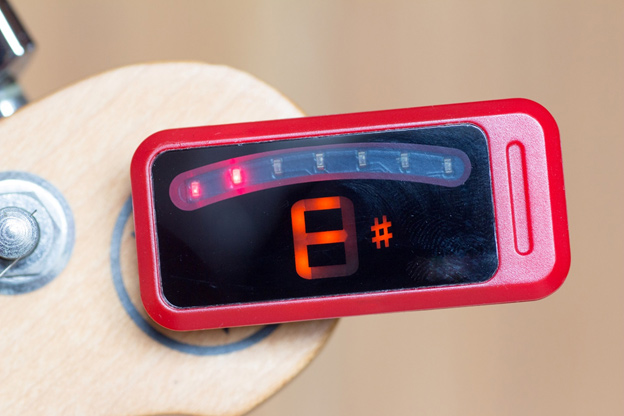
Guitar Tuners
Every musician needs a tuner, and guitarists are no exception. Guitar tuners let you adjust each open string so they are set to the correct pitch. This ensures you are playing the proper notes with no intonation or tone issues, producing a more pleasant sound. Many types of guitar tuners let you set the instrument to standard or alternate tunings:
- Classic handheld tuners can be placed on a desk, table or stand and has an input jack that allows you to tune accurately in noisy areas.
- Clip-on tuners attach to the guitar headstock and sense string vibrations so you don’t need an audio signal.
- Pedal tuners or stomp box tuners go on your pedalboard and mute other effect signals when activated.
- Smartphone tuners are apps that use a phone’s microphone, though they aren’t as accurate as standalone models.
- Battery-operated tuners use AA, AAA or CR-style replaceable batteries for easy swaps on the rood.
- Rechargeable tuners can be plugged into a wall outlet or USB charger to save money on batteries.
- AC/DC tuners get their power from a wall outlet and may have a battery backup.
Spare Guitar Strings
Every guitarist is going to break a string sooner or later. When it happens, you don’t want it to end your session for the day — especially if you’re in the middle of a show. You should always have at least one set of spare guitar strings for each guitar you own so you can replace broken and worn strings. There are many types of strings — acoustic, electric, medium-gauge, heavy-gauge, coated, etc. — so you can go with a tried-and-true favorite or experiment with different styles.
String Winder/Cutter
You should also keep a string winder and cutter handy. These two-in-one tools let you change strings in less time. The winder turns the tuning pegs faster than you can by hand. The cutter trims the excess string ends so they aren’t flopping around, potentially hitting other equipment and scratching people.
Picks
While some people exclusively pluck with their fingers, most use a pick or plectrum. A guitar pick produces a brighter, more defined and more consistent tone than fingerpicking. They also let you play faster and more precisely. By experimenting with the pick size, shape, material and thickness, you can give a guitar seemingly countless tonal qualities. Read our other guides to learn more about choosing the best picks for an acoustic guitar or electric guitar.
Capos
Our final essential accessory is the guitar capo, a device that benefits beginners and advanced guitarists. Capos clamp directly onto the fretboard or frets, which raises the pitch of every string by the same amount. This changes the key of a song without needing to alter the chord and string fingerings. For example, by putting a capo on the second fret and playing an E-chord shape, you’ll get an F# chord. A capo can make songs easier to play, transpose the key so it matches a singer’s vocal range and alters the emotional color.

Amplification and Cable Management
You’ll need a way to amplify your sound if you want to take your guitar talents on the road, record songs or jam with other musicians. Guitar amplification can range from simple practice setups to extravagant stadium systems, but they’re all based on the same equipment. Here’s the gear you need for a seamless playing experience.
Amplifiers
As the name suggests, an amplifier takes the output signal from your guitar and makes it louder. There are many types of guitar amplifiers depending on what you play and what sound you’re trying to make.
- Vacuum tube amplifiers are the classic amp that produces a smooth, warm tone and creates natural distortion. They’re great for electric guitars and rock bass, especially when playing vintage music like blues.
- Solid-state amplifiers use transistors for a cleaner sound that works well with acoustic guitars. The amps are also lighter than tube amplifiers and have more headroom.
- Digital amplifiers are the cleanest, most efficient amplifiers available. They can use processing technology to model other amplifier sounds and offer the truest effects reproduction.
Amp designs vary in other ways, too. Some have one audio channel while others have multiple channels. Some have built-in effects while others are limited to basic volume adjustments. You’ll find different cable inputs, and you can even get battery-powered guitar amps. The more watts an amp produces, the louder the sound but the bigger the power draw.
Cables
You’ll also need various cables to connect your guitar, effect pedals and other equipment. Here’s a basic overview of the different cables used to get the best sound quality and setup options.
- 1/4-inch straight jack cables are the most common electric, acoustic and bass guitar cable type with a mono (single-channel) signal to go to an amplifier or soundboard.
- XLR cables are three-pin cables with two audio wires that help reduce noise for a cleaner signal. They are mainly used for microphones and audio mixers, but some acoustic/electric guitars have XLR outputs.
- Patch cables are short cables for connecting pedals and boxes without excess cable that can get twisted or cause tripping.
- MIDI cables are five-pin cables that use the Musical Instrument Digital Interface to transfer and sync signals between effects pedals, controllers and compatible instruments.
- RCA cables are unbalanced mono cables used to connect older audio and video devices. The red and white connectors are left/right audio and the yellow connector is video.
- USB cables have a 1/4-inch straight jack end and a USB end with a conversion chip so you can plug your guitar into a computer or another USB device for direct recording.
- HDMI cables transmit audio and video through the same High-Definition Multimedia Interface. Use them to connect compatible audio sources to a computer or laptop.
Power Supplies and Cable Management
Finally, you need a way to power and organize all that gear. Effect pedals are difficult to connect to a traditional wall outlet, which is why they often use a separate power supply. A power cable connects individual pedals or the entire board to the mains’ electricity; use daisy chains to link pedals for power purposes. An isolated power brick has multiple outlets to plug the pedals in. You’ll also want some ties and wraps for all your cables. They’ll keep them from flopping around on stage or sprawling through gig bags, reducing clutter and improving aesthetics.

Enhancing Performance and Protection
You need to take care of your guitar and yourself when you play. This means having accessories that contribute to an improved performance setup and off protection against damage or injury. Consider these accessories for your practice area or show bag.
Strap Locks
Guitar strap locks are pieces of metal, plastic or rubber you place over each strap button after adding the strap. This prevents the strap from coming loose during practices and performances so your guitar remains attached. You’ll have security and peace of mind whenever you’re on stage.
Headphones and Earplugs
Make sure you hear what you want to! By plugging headphones into your amplifier or effects box, you can practice without disturbing neighbors and roommates. During loud gigs, a set of ear plugs will protect your ear drums against short-term effects like ringing or permanent hearing damage.
Hard Guitar Cases and Wall Hangers
We recommend keeping your guitar in a hard case, especially when traveling. This will protect against impacts and let you stack guitars with other equipment. At home or in the studio, you might consider a guitar wall hanger; this storage solution shows off your instrument while freeing up floor space.
Creative and Functional Studio Gear
The studio and the stage aren’t just places for executing songs; they’re places for creative exploration. The right accessories let you enjoy the functionality you need in a studio environment while allowing you to try new things and push boundaries.
Guitar Pedals and Pedalboards
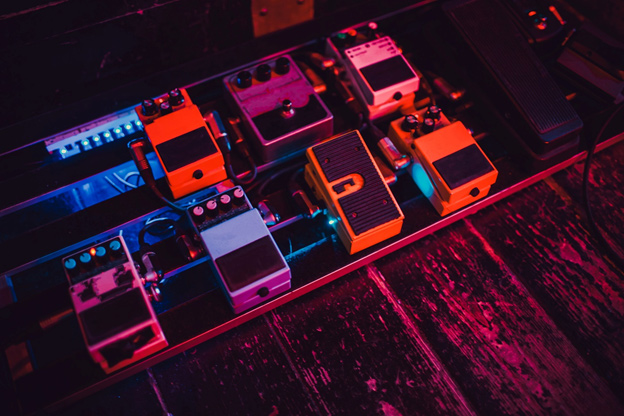
By using guitar pedals to add effects like distortion, fuzz, chorus and delay, you can manipulate the sound to achieve what your mind envisions. While some pedals have multiple effects built-in, many guitarists prefer individual pedals that let them switch and tweak on the fly. For this, an organized pedalboard lets you keep all the pedals in reach and turn them off or on with your foot.
Acoustic Foam and DI Boxes
For a great recording, you need the best sound quality and signal transmission. By lining the studio with acoustic foam, walls and ceilings will absorb excess sound waves instead of reflecting them, eliminating unwanted echoes and reverb. You will also want a direction injection (DI) box to connect instruments to PA systems and mixers. DI boxes convert the unbalanced high-impedance instrument signal to a balanced low impedance with minimal signal loss.
Maintenance Kits and Cleaning Products
A well-maintained guitar will sound better in the studio, look better on stage and last longer so you can enjoy its tones. Be sure your tool kit is filled with essential guitar maintenance tools and cleaning products such as:
- String cleaner and lubricant
- Fretboard cleaner and conditioner
- Guitar cleaner, polish and wax
- Microfiber cleaning cloths
- Bridge pin pullers
- String height gauges
- Hex key intonation adjusters

Practice and Learning Aids
A guitarist is never too experienced to learn new things. Accessories are available that aid practice sessions, help you develop new skills and keep guitars in better condition so you can play them more often.
Metronomes and Music Stands
A music metronome maintains a consistent tempo to help new musicians develop timing and rhythm. Veteran guitarists use metronomes as well, especially during recording sessions to ensure they play each part at the same beat. When you’re reading music or tablature during practice, a music stand will keep the papers in place at eye level so you can focus and don’t have to hunch over.
Gear Bags
By staying organized, you’ll spend less time searching for equipment and more time practicing. Find a good guitar gear bag with lots of compartments and pockets to store your supplies. They range from small bags for basic accessories to large gig bags designed to bring to shows.
Humidifiers and Hygrometers for Acoustic Guitars
Between practices, you need optimal humidity levels for guitars, especially acoustic models. Too little air moisture can cause the wood to shrink and crack while too much may lead to warping and swelling. Guitar humidifiers clip to the guitar or go in the case to maintain a humidity level of 45-55%. With a hygrometer device, you can measure current humidity levels to see if adjustments are needed.
Use the Best Accessories for Guitarists
Every accessory a guitarist uses should serve a purpose, whether it’s preserving the instrument, enhancing performance, improving practice routines or fostering creativity. From necessities like tuners and capos to amplification, pedals, cases and cleaning supplies, owning the right accessories will help guitarists reach musical heights they never imagined. Find the guitar accessories you need at Strings and Beyond so you’re always ready to play.