
Choosing the Right Strings for Your Instrument: String Selection Guide
Jun 12th 2025
What to Look for When Choosing Strings for Your Instrument
String Materials Matter
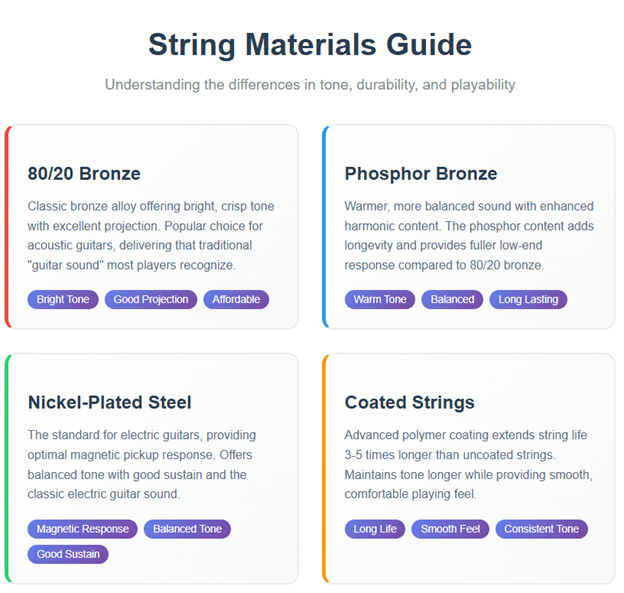
he material of your strings dramatically affects tone, playability, and longevity. Bronze strings offer bright, crisp tones perfect for strumming, while phosphor bronze provides warmer, more balanced sound. Nickel-plated steel delivers the classic electric guitar tone, and stainless steel offers enhanced durability and brightness.
Coated vs. Uncoated Strings
Coated strings like Elixir's Nanoweb can last 3-5 times longer than traditional strings, making them ideal for frequent players. Uncoated strings provide more natural feel and immediate tonal response, preferred by many professional musicians.
Brand Reputation and Quality
Established brands like D'Addario, Elixir, Ernie Ball, and Thomastik-Infeld have decades of experience crafting reliable strings. These manufacturers invest heavily in quality control and innovation, ensuring consistent performance across their product lines.
Gauge Selection
String gauge affects both playability and tone. Lighter gauges are easier to play and bend, making them ideal for beginners and lead players. Heavier gauges produce fuller tone and better sustain but require more finger strength.
Common Instruments & Their Strings

Acoustic Guitar Strings
Finding the right acoustic guitar strings depends on your playing style and tonal preferences. Bronze strings offer bright, vintage tones that work well for strumming and fingerpicking, while phosphor bronze alternatives provide warmer, more balanced sound with extended harmonic content. Coated options significantly extend string life, making them cost-effective for frequent players who want consistent tone without regular string changes. For a detailed breakdown of string types, gauges, and coatings, see our guide on How to Choose the Best Acoustic Guitar Strings.
Electric Guitar Strings
Electric guitar strings primarily use nickel-plated steel construction for optimal magnetic pickup response and tonal balance. Standard nickel-plated options provide the classic electric sound most players recognize, while premium alloys offer enhanced output and improved break resistance. Coated electric guitar strings extend playing life while maintaining smooth feel under your fingers during extended sessions. For a full breakdown of materials, gauges, and coated vs. uncoated options, check out our guide on How to Choose the Best Electric Guitar Strings.

Classical Guitar Strings
Classical guitar strings require nylon construction for authentic sound and proper tension. Traditional sets combine clear nylon trebles with silver-plated wound bass strings, though modern composite materials offer enhanced projection and tuning stability. The choice between high-tension and normal-tension classical guitar strings affects both playability and volume output.
Bass Strings
Bass strings come in roundwound and flatwound varieties, each offering distinct tonal characteristics. Roundwound bass strings provide bright attack and harmonic content ideal for rock and contemporary styles, while flatwound options deliver smooth vintage tone perfect for jazz and classic rock applications. Coated bass strings extend playing life significantly while maintaining consistent tone and smooth playing feel.

Violin Strings
Violin strings range from steel core options suitable for student instruments to synthetic and gut core strings preferred by professional players. Steel core violin strings offer stability and projection at affordable prices, while synthetic core alternatives provide warmer tone with improved playability. Premium options use advanced materials for enhanced response and tonal complexity.
Banjo Strings
Banjo strings vary significantly based on playing style and instrument type. Phosphor bronze and 80/20 bronze materials suit different tonal preferences, while nickel-plated steel options offer bright attack perfect for bluegrass picking. The choice of banjo strings affects both volume projection and harmonic content crucial for ensemble playing.
Mandolin Strings
Mandolin strings require high tension construction to handle the instrument's tuning and scale length. Phosphor bronze mandolin strings provide warm, balanced tone with good projection, while 80/20 bronze alternatives offer brighter attack suitable for cutting through mix. Premium options feature improved core materials for enhanced tuning stability.

Ukulele Strings
Ukulele strings typically use nylon or fluorocarbon materials optimized for the instrument's unique requirements. Traditional nylon ukulele strings offer classic tone and feel, while fluorocarbon alternatives provide enhanced projection and tuning stability. String choice significantly affects intonation across the fretboard, making quality important for serious players.
Need Help Choosing?
Still unsure which strings are right for your instrument? Our team of music experts is here to help you find the perfect match for your instrument and playing style. We pride ourselves on our fast, friendly service. Simply call us toll-free or submit a form and we'll provide you personalized pointers.